%20copy.png)
Nurtura
An autism - focused therapeutic clinic, where nature - driven design nurtures emotional regulation and meaningful engagement.
Rooted in the balance between nature and nurture, the design envisions the clinic as a living
environment that responds to each individual’s inherent nature through care, adaptability, and growth.
While our nature defines how we perceive and experience the world, the built environment, as a form of nurture, shapes how we thrive within it. The clinic becomes a protective ecosystem that listens, adapts, and gently guides users toward comfort, regulation, and confidence, allowing every person to grow in alignment with their own natural rhythm.


Conceptual Narrative
The design is guided by the ASPECTSS framework, a set of evidence-based principles developed for autism-friendly environments. ASPECTSS stands for Acoustics, Spatial Sequencing, Escape Spaces, Compartmentalisation, Transition, Sensory Zoning, and Safety. These criteria inform key design decisions, ensuring the space supports comfort, clarity, and sensory regulation through thoughtful spatial organization, controlled acoustics, and a safe, adaptable environment.


Groubd Floor Spatial Layout
Entry Canopy

The reception and waiting area is designed to accommodate a range of comfort needs through a variety of seating options, allowing users to choose spaces that suit their preferences. Open seating encourages social interaction, while more enclosed arrangements provide a sense of personal space. Integrated escape spaces are thoughtfully positioned throughout the area, offering quiet nooks where individuals experiencing overstimulation in a public environment can retreat, regulate, and regain comfort. This balance between openness and privacy creates a welcoming yet supportive atmosphere for all users.
Kids Play Area


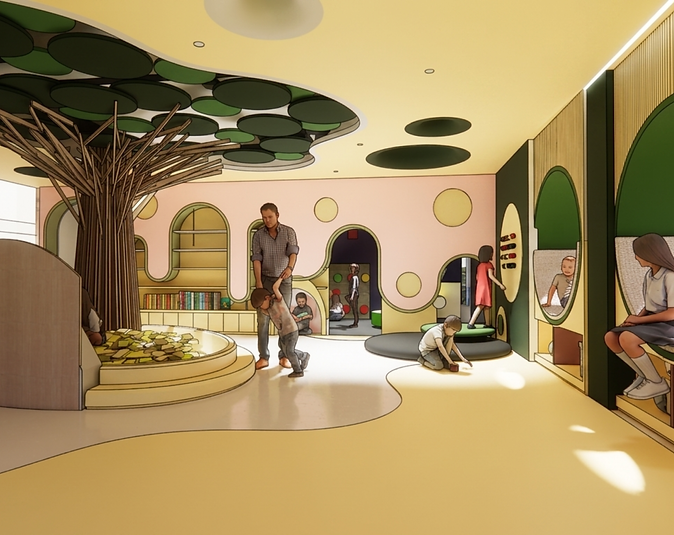
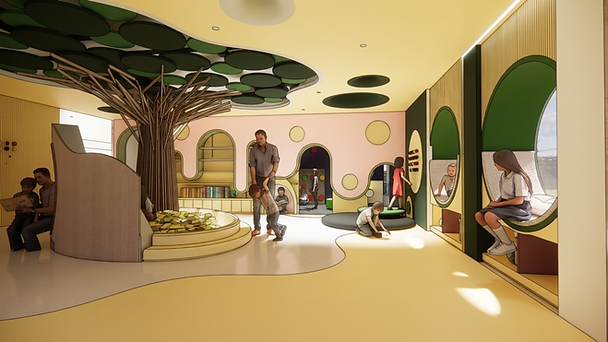
The kids’ play area is designed as a safe, engaging, and sensory-responsive environment that encourages exploration and creativity. Soft forms, rounded edges, and varied textures create a playful yet secure setting, while the layout allows children to move freely and interact at their own pace. Interactive elements and built-in features support both active play and quieter moments, catering to different sensory needs. Enclosed niches and small-scale spaces provide opportunities for retreat and regulation, ensuring that children who feel overstimulated can find comfort within a protected, calming nook.

The sensory room is integrated within the play area, providing a controlled environment for sensory engagement and regulation. Soft lighting and interactive elements support exploration, while quieter zones offer spaces for calm and retreat, allowing smooth transitions between play and self-regulation.
First Floor Spatial Layout

Consultation Room

The consultation room is designed as a calm and supportive environment that balances professional interaction with comfort. Soft materials, warm tones, and biophilic elements create a welcoming atmosphere, helping to ease anxiety during sessions. Integrated seating and child-friendly niches allow for flexibility, accommodating both formal discussions and more relaxed, child-centered interactions. The layout ensures privacy while maintaining a sense of openness, supporting effective communication and emotional comfort.

Roof Garden

The roof garden extends the therapeutic environment outdoors, offering a calm and restorative space connected to nature. Soft landscaping, shaded seating, and open circulation allow users to move freely, relax, and engage at their own pace. The integration of greenery and natural materials supports sensory regulation and well-being, creating a peaceful setting for reflection, social interaction, and quiet retreat.
